


No. There is no fixed upper age limit for a facelift. A facelift, also called a rhytidectomy, addresses visible signs of facial ageing such as jowling along the jawline, deepening folds from the nose to the mouth, and loose neck skin. What matters is the condition of the tissues and your general health, not the year on your ID.
Surgeons regularly consider patients from their 40s into their 80s. The American Society of Plastic Surgeons notes that patients over 65 can safely undergo plastic surgery without higher complication rates than younger patients when they are in good health and operated on by a board-certified plastic surgeon (ASPS, 2026). The same principle guides practice in South Africa. Candidacy is always decided at a personal consultation, never online.
What follows is a candid guide to how surgeons actually think about age when they screen a facelift patient, what tends to argue in your favour, and what argues against it.
What surgeons actually assess for candidacy
Three things determine whether a facelift is right for you. The first is tissue quality: how much elasticity remains in your skin, how well the deeper muscular layer (the SMAS, meaning the sheet of muscle and connective tissue beneath the skin of the face) supports the soft tissues, and where volume has been lost in the cheeks and mid-face. The second is your general health: cardiac fitness, lung function, healing ability, and your support at home during recovery. The third is whether your expectations match what the operation can realistically deliver.
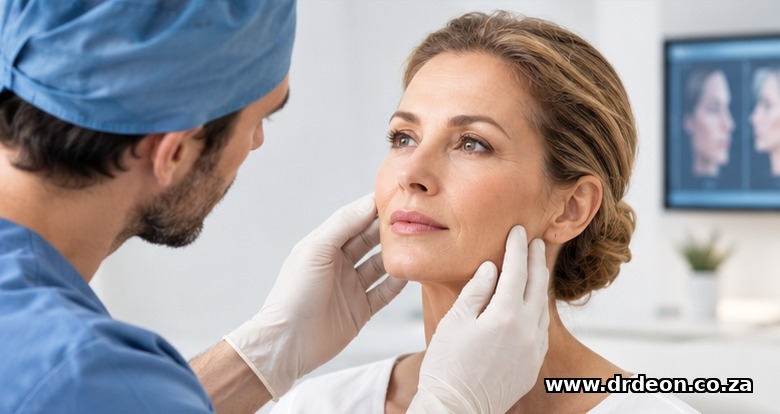
None of those three things is fixed to a birthday. The Cleveland Clinic notes that the average age for facelift patients sits in the late 50s to early 60s, with patients ranging from their 40s to well into their 80s (Cleveland Clinic, 2024). That range, not a single number, is the honest answer to “what is the right age”.
Skin quality matters more than the year on your ID
Elastic skin holds a result. Skin that has lost its snap through sun damage, smoking, or simply years of weight fluctuation tends to redrape poorly and may heal with more visible scarring. This is why a 52-year-old non-smoker with good skin elasticity is often a stronger candidate than a 48-year-old heavy smoker with marked solar damage.
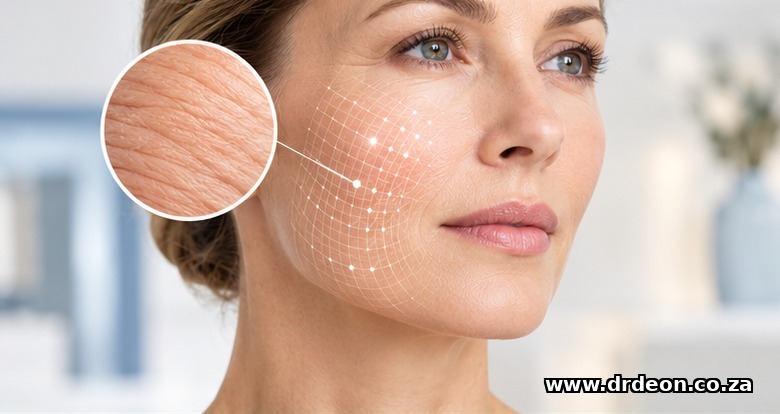
Skin elasticity is also what determines how long a result lasts. A facelift does not stop the clock. The smoother jawline and lifted neck you see in the mirror a few months after surgery will continue to age. The better your skin quality going in, the more years that improvement typically carries forward.
Your health picture, not your birthday
The surgeons ASPS interviewed for its 2026 article on age in plastic surgery were unanimous that “too old really means not being healthy or well enough”. Chronological age and biological age are different things. A healthy, active 72-year-old with controlled blood pressure, good lung function, and a supportive recovery environment may be a stronger candidate than a 55-year-old with poorly controlled diabetes and a smoker’s cough.

For older patients, the routine check before surgery is clearance from an internist or cardiologist. The factors surgeons weigh include cardiac health and blood pressure, lung health and smoking status, healing markers in your blood work, overall physiologic fitness, and whether you have the support at home to manage the first week or two of recovery (ASPS, 2026).
Realistic expectations and timing
A facelift repositions deeper tissues and removes excess skin. It does not stop ageing and it does not change the underlying bone structure of your face. A facelift done earlier in the ageing process tends to look more natural and last longer, because there is less loose skin to remove and the surgical change is smaller. A facelift done later, when jowls and neck laxity are well established, corrects more change but the result may be more visibly a surgical result.
What a facelift cannot do is substitute for a difficult life moment. If you are considering surgery during grief, a relationship breakdown, or professional pressure, surgeons typically recommend deferring until emotional stability is established. That is a candidacy call in its own right.
Risks and complications to weigh honestly
Facelift surgery carries the recognised risks of any major operation under general anaesthetic, plus a small set specific to the face and neck. These include haematoma (a collection of blood under the skin that sometimes needs to be drained), infection, temporary or rarely persistent facial nerve weakness affecting expression, visible or widened scarring, asymmetry between the two sides, patches of skin loss (more common in smokers), anaesthetic complications, and the possibility of a revision procedure. The Cleveland Clinic notes that bruising and swelling typically take 10 to 14 days to settle after a basic facelift, with more extensive procedures taking longer (Cleveland Clinic, 2024).
Health status influences that risk profile more than age alone does. This is precisely why the screening process above matters so much. Candidacy is the conversation where those risks are weighed against the likely benefit in your specific case.
Common mistakes to avoid
- Choosing a technique by age alone. The decision should turn on anatomy, tissue quality and your goals, not on the assumption that a “mini” is for the young and a “full” is for the old. A well-matched mini in the right 60-year-old beats a full facelift in the wrong 50-year-old.
- Assuming you are too old without being screened. The honest question is not “am I too old” but “am I well enough”. If your internist clears you and your surgeon agrees, age alone is not a reason to be turned away.
- Pursuing a facelift to fix a life problem. A facelift changes the face in the mirror. It does not change relationships, career trajectories or grief. Emotional readiness is part of surgical readiness.
- Skipping the pre-operative work-up because “I feel fine”. Feeling fine and being anaesthetic-ready are not the same thing. Blood pressure control, anaemia, blood sugar, smoking status and medication review all matter, and they are checked for a reason.
Candidacy is decided in person
This page gives general information about how facelift candidacy is thought through. It is not a substitute for a personal assessment. At DW Skin & Body, the consultation, the procedure and the follow-up are all with Dr Deon Weyers personally, the practice’s only surgeon. Dr Weyers is a board-certified plastic and reconstructive surgeon registered with the Health Professions Council of South Africa and a member of the Association of Plastic, Reconstructive and Aesthetic Surgeons of Southern Africa.
An online photo-review through the contact page is a useful first step if you are based outside Johannesburg. The in-person consultation is where candidacy is properly determined. DW Skin & Body sees patients from across South Africa at its Fourways practice, including those considering a facelift at any age where health and tissue quality support it.
To arrange a consultation, call 011 875 1694.
Frequently Asked Questions
Is there a maximum age for a facelift?
No fixed maximum age exists. Surgeons routinely consider patients into their 80s provided they are in good general health and have appropriate tissue quality. The deciding factors are cardiac and lung fitness, healing ability and skin elasticity, not the year on your ID.
What is the youngest age for a facelift?
There is no fixed minimum either, but most surgeons do not offer a surgical facelift to patients under 40 unless there is a specific anatomical indication. Earlier signs of ageing in younger patients are usually addressed with non-surgical options such as neurotoxin injections, fillers, skin treatments or Ulthera.
What is the best age for a facelift?
There is no single best age. International practice shows the average facelift patient is in their late 50s to early 60s, with patients ranging from their 40s to their 80s. The right time depends on your tissue quality, your health and your goals, and is decided at consultation.
Is 70 too old for a facelift?
Not on age alone. Research cited by the American Society of Plastic Surgeons shows patients over 65 can safely undergo plastic surgery without higher complication rates than younger patients when in good health. For a 70-year-old, the deciding factor is clearance from an internist or cardiologist, not the birthday.
Can you have a facelift in your 40s?
Yes, a facelift can be appropriate in the 40s when there is enough skin laxity and structural change to justify surgery. Skin elasticity and bone structure still tend to be favourable, and the result often lasts longer when the procedure is done earlier in the ageing process.
Does health matter more than age for a facelift?
Yes. Biological age, meaning how well your heart, lungs and healing systems are working, matters more than chronological age. A healthy 75-year-old can be a stronger surgical candidate than a medically frail 55-year-old, and that is the principle surgeons apply when screening.
Considering a procedure? Candidacy is assessed in person. Dr Deon Weyers is a board-certified plastic and reconstructive surgeon registered with the HPCSA, and sees patients at the Fourways practice. Call 011 875 1694 or use the online consultation and photo-review form.
Medical disclaimer. This article is general information about how facelift candidacy is assessed across different ages. It is not medical advice for any individual and does not replace an in-person consultation. Outcomes, recovery, scarring and candidacy vary between patients and can only be properly assessed in person by an HPCSA-registered practitioner. Readers considering a facelift should consult a qualified plastic and reconstructive surgeon about their own circumstances. If you are based in South Africa, confirm your surgeon’s registration with the Health Professions Council of South Africa.
