


Chemical Peels for Skin Rejuvenation | Dr Deon Weyers
A chemical peel uses a controlled exfoliating solution to remove damaged surface skin cells, revealing smoother, more even-toned skin underneath. The depth of the peel decides what it can treat and how long recovery takes.
Chemical peels, also called chemexfoliation or derma peeling, are among the most widely used non-invasive skin treatments in South Africa. They are commonly performed on the face, neck and hands to improve fine lines, sun damage and uneven pigmentation.
Peels are provided at the practice at Life Fourways Hospital in Johannesburg, under the care of board-certified plastic and reconstructive surgeon Dr Deon Weyers, and are matched to your skin type and goals.
Credentials You Can Trust






Book an Online Consultation
The practice will respond to your enquiry.
Credentials You Can Trust
Reviews You Can Trust


Choosing a plastic surgeon is a highly personal decision. Our consistent patient feedback and 4.9-star Google rating reflect the high standard of care, professionalism and patient experience you can expect with Dr Deon Weyers.

How Chemical Peels Work
Every chemical peel works on the same principle: a solution is applied that causes the outer, damaged layers of skin to shed in a controlled way. What changes from one peel to another is the strength of the solution and how deeply it acts.
Superficial peels act on the outermost layer of skin and refresh texture and tone with little downtime. Medium-depth peels reach further, into the upper part of the deeper skin layer, and can improve more noticeable pigmentation and fine wrinkles, with a longer recovery. Deep peels are a more intensive category that is only appropriate for selected skin and concerns.
- Superficial peels
- Medium-depth peels
- Pigmentation
- Fine lines and texture
- Face, neck and hands
Skin type matters as much as the concern being treated. Darker skin tones have a higher tendency to develop pigmentation changes after inflammation, so the choice of peel, its strength and the preparation of the skin are adjusted accordingly. This is one of the main reasons a peel is chosen at consultation rather than off a menu.
For a closer look at what a peel appointment at the practice involves, see chemical peel treatment in Johannesburg. The practice’s article on chemical peels covers common questions in more detail.
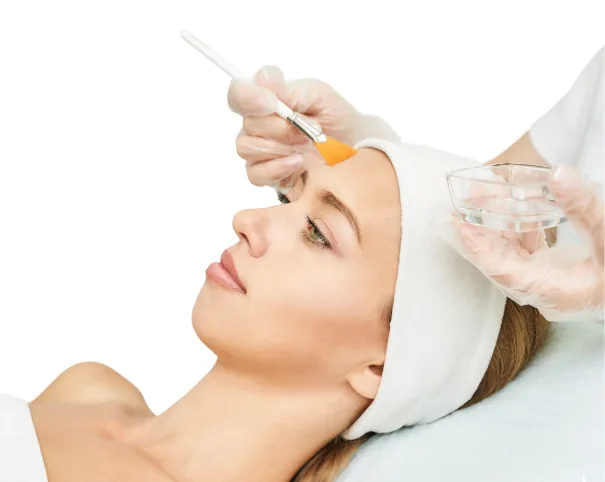
What Chemical Peels Can Improve
Peels can reduce the appearance of fine lines and wrinkles, age spots, irregular pigmentation, uneven texture and sun damage. The new skin that forms after peeling is usually smoother and more even.
For most people a course of 4 to 6 peels is recommended, because repeated lighter treatments build improvement while keeping recovery manageable.
The depth of a peel is the key decision. A deeper peel is not automatically better: the right depth balances what you want to improve against your skin type and the recovery you can accommodate.
Superficial vs Medium-Depth Chemical Peels
Superficial Peels
Act on the outermost skin layer to refresh dullness, mild pigmentation and rough texture.
Little downtime, usually repeated as a course, and suitable for a wide range of skin types with appropriate preparation.
Medium-Depth Peels
Reach deeper to address more established pigmentation, sun damage and fine wrinkles.
More visible peeling and a longer recovery, with stricter sun avoidance and closer selection for darker skin types.
| Aspect | Superficial peel | Medium-depth peel |
|---|---|---|
| Depth of action | Outermost skin layer | Into the upper part of the deeper skin layer |
| Typical concerns | Dullness, mild pigmentation, texture | Sun damage, established pigmentation, fine wrinkles |
| Visible peeling | Light flaking | Noticeable peeling and redness |
| Recovery | Usually a few days | Up to about a week |
| Number of treatments | Course of several peels | Fewer peels, spaced further apart |
| Skin type considerations | Suits most skin types with preparation | Selected more carefully in darker skin |
How a Chemical Peel Treatment Works
Chemical peels are performed in-rooms. No anaesthetic is usually needed, although some warmth or stinging is expected while the solution is on the skin.
Skin assessment
Your skin type, concerns, sun exposure and history of pigmentation or cold sores are reviewed to choose the right peel and strength.
Skin preparation
You may be asked to use specific products in the weeks before a peel to prepare the skin and reduce the risk of pigment changes.
Application
The skin is cleansed and the peel solution is applied evenly for a controlled time, then neutralised or removed.
Peeling phase
Over the following days the treated skin may feel tight, look red and then flake or peel as new skin forms underneath.
Course and maintenance
Further peels are spaced to allow full recovery, with home care and sun protection maintained throughout.
Which Skin Types Suit Which Peel
Most people can have some form of chemical peel. The question is which depth and strength suit their skin.
- Fair skin with sun damage – Often suited to a wider range of peel depths
- Medium to dark skin tones – Usually treated with lighter peels and careful preparation to protect against pigmentation
- Pigmentation concerns – Peel choice depends on the type of pigmentation and its depth
- Acne-prone skin – Some peels help with congestion once active inflammation is controlled
- Sensitive or reactive skin – May need a gentle peel and a test approach
- Recent sun exposure or active infection – Treatment is postponed until the skin has settled
The final choice of peel is made in person, after examining your skin.
Choosing the Right Peel Depth
These questions guide the choice between peel depths at consultation.
- What do you most want to improve?Texture and glow point to lighter peels; established pigmentation or sun damage may need more depth.
- How much downtime can you accommodate?Lighter peels involve days of mild flaking; deeper peels involve a longer, more visible recovery.
- How does your skin respond to inflammation?A history of dark marks after spots or injuries influences how strong a peel should be.
- Can you avoid the sun after treatment?Strict sun protection after a peel is essential, so timing around holidays and outdoor work matters.
What Chemical Peels Cost
The cost of chemical peels depends on the type of peel, the area treated and the number of treatments in your course. Pricing is confirmed at consultation once the peel has been chosen.
Pre-treatment and aftercare skincare products, if recommended, are priced separately.
Cosmetic peels are generally not covered by South African medical aids.
What People Often Get Wrong About Peels
Peels are simple to book but easy to misjudge. These misunderstandings are the most common.
Risks and Possible Side Effects
Recognised Side Effects of Chemical Peels
Expected effects: a sunburn-like reaction, then scaling or flaking for 3 to 7 days. Stronger peels can cause redness, swelling and stinging for up to 7 days.
Pigmentation changes: darkening or lightening of the skin, more likely in darker skin types and with sun exposure.
Cold sore reactivation: people with a history of cold sores may need preventive treatment before a peel.
Uncommon complications: infection, prolonged redness and, rarely with deeper peels, scarring.
Lowering the Risks
- Choose the depth carefully – based on skin type and history, not on the strongest option available.
- Prepare the skin – with any products recommended before treatment.
- Use the prescribed aftercare – such as a recommended ointment or moisturiser.
- Avoid sun exposure completely – while healing, then protect the skin daily.
Contact the practice if you notice blistering, crusting, increasing pain or swelling, signs of infection or dark patches developing after a peel. Early review helps protect the result.
Medical disclaimer. This page is general information and does not replace a face-to-face consultation. Treatment decisions require an in-person assessment, a full consent discussion and individual medical advice.
Chemical Peel Facial Treatment: Frequently Asked Questions
What does a chemical peel do for the face?
It removes damaged surface skin cells in a controlled way so that smoother, more even skin can form. Peels are used for fine lines, sun damage, age spots, pigmentation and texture.
How many chemical peels will I need?
A course of 4 to 6 peels is usually recommended. The spacing between them depends on the type of peel and how your skin recovers.
How long does peeling last?
Flaking usually lasts between 3 and 7 days. With stronger peels, redness, swelling and stinging can last up to 7 days.
Are chemical peels safe for darker skin?
Yes, with careful selection. Darker skin tones are more prone to pigmentation after inflammation, so lighter peels, skin preparation and strict sun protection are used.
Can peels be done on the neck and hands?
Yes. Peels are commonly performed on the face, neck and hands, with the strength adjusted for each area.
Can I combine a peel with other treatments?
Peels are often part of a wider plan with skin needling or Sculptra. Treatments are spaced to give the skin time to recover.
Where are chemical peels done?
At the practice at Life Fourways Hospital in Johannesburg. Patients from across South Africa are welcome, and an online consultation can be a first step.
Speak to Dr Deon Weyers About Chemical Peels
Dr Deon Weyers is a board-certified plastic and reconstructive surgeon, registered with the Health Professions Council of South Africa and a member of APRASSA. Non-surgical treatments are provided at the practice’s single location at Life Fourways Hospital in Johannesburg.
Call 011 875 1694
Office hours: Monday to Thursday 08:00 – 17:00, Friday 08:00 – 14:00 · send a message
Image credits: Hero, context and final panel image: about-the-practice-fourways-life-hospital-johannesburg.jpg, drdeon.co.za media library..