


Regenerative medicine in plastic surgery is the use of a patient’s own biological tissue, most often fat, platelets or stem-cell-rich fractions, to support reconstruction or refine the result of a cosmetic procedure. Rather than relying only on synthetic implants or mechanical lifting, the regenerative approach harnesses living tissue to restore volume, improve skin quality, and aid healing.
This article explains what regenerative medicine means in a plastic surgery context, how it is applied in reconstructive and cosmetic practice, where the evidence currently stands, and what to weigh up before considering a regenerative procedure.
What regenerative medicine means in plastic surgery
The American Society of Plastic Surgeons describes regenerative medicine as a field based on the premise that physicians can harness the body’s own powers to heal, rather than relying exclusively on drugs or invasive surgery. In plastic surgery, that translates into techniques that use the patient’s own cells or tissue to replace, restore, or establish normal function.

In day-to-day surgical practice the term covers a small, well-defined set of techniques:
- Autologous fat grafting, where fat is harvested from one area of the body (commonly the abdomen or thigh), processed, and re-injected into another site to restore volume or contour.
- Fat transfer enriched with adipose-derived stem cells, a refinement of fat grafting where the stem-cell-rich fraction of the harvested fat is concentrated before reinjection, with the goal of improving graft survival.
- Platelet-rich plasma (PRP), a preparation made from a sample of the patient’s own blood, used as an adjunct to support healing and, in some indications, skin quality.
- Tissue engineering and bioengineered scaffolds, which remain largely in research and early clinical use, and are not routine offerings in a private cosmetic practice.
Two of these, autologous fat grafting and fat transfer, are the techniques that matter most in routine plastic surgery, including the facial fat grafting and regenerative stem cell facelift work performed at DW Skin & Body.
Where regenerative techniques are used
Regenerative techniques cross two of the practice’s five procedure families: reconstructive surgery and facial surgery. Their uses, in plain terms, are:
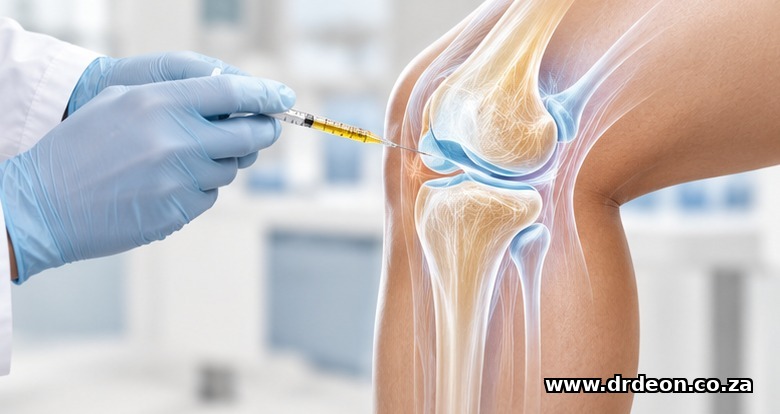
- Reconstruction after breast cancer or skin cancer: fat grafting is used to refine contour after implant-based or flap-based breast reconstruction, and to soften the appearance of scars or contour defects after tumour removal.
- Trauma and burns repair: fat grafting and PRP have been studied as adjuncts to improve the quality of scarred tissue and support healing in complex wounds.
- Facial rejuvenation: in carefully selected patients, fat transfer (with or without stem-cell enrichment) is used to restore volume in the midface, around the eyes, and along the jawline, alongside other facial procedures.
- Revision of unsatisfactory scars: regenerative adjuncts are sometimes used to soften the texture and appearance of established scars from earlier surgery or trauma.
Autologous vs donor-derived: the basic distinction
One of the cleanest ways to understand the field is the autologous-versus-allogeneic split. PlasticSurgery.org frames it this way:
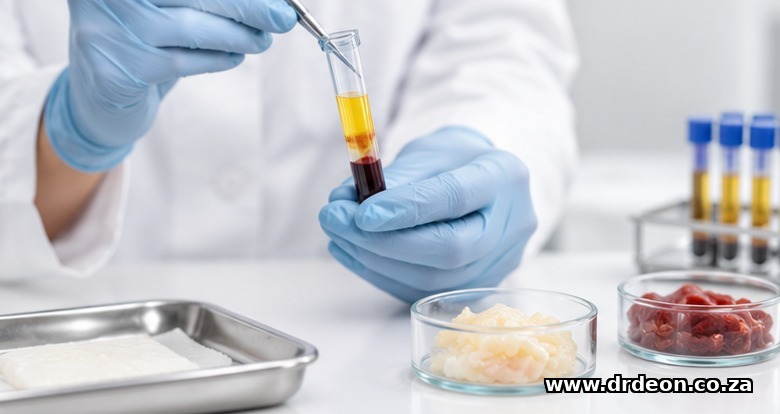
Autologous treatments use cells from your own body, exclusively for your own use. Allogeneic treatments use cells from another person (a donor), with extensive testing and laboratory expansion before use.
Almost all of the regenerative work performed in a routine private plastic surgery practice is autologous: fat and blood come from the patient sitting in front of the surgeon. Allogeneic (donor-derived) stem-cell therapies are still largely investigational and are not routine offerings in cosmetic practice in South Africa.
What the evidence currently supports
A 2014 review on stem cell research in plastic surgery, indexed in PubMed Central, concluded that stem-cell-assisted fat grafting and related regenerative techniques show real promise for soft-tissue reconstruction and facial rejuvenation, while also flagging that long-term outcome data and standardised protocols are still maturing.
A more recent Springer Nature collection on regenerative plastic surgery describes the field as a transformative approach within reconstructive surgery, integrating growth factors, platelet-rich plasma, adipose-derived stem cells, and tissue engineering to reduce scarring and improve outcomes. The honest reading of the literature is that regenerative techniques are useful adjuncts, not replacements, for established surgical procedures, and that the strongest evidence sits with autologous fat grafting.
Risks and limitations to be aware of
Regenerative techniques are surgical procedures, even when they are described as “natural” or “minimally invasive”. The risks a patient should weigh include:
- Donor-site morbidity: the area from which fat is harvested (often the abdomen or thigh) carries its own risks of bruising, contour irregularity, and prolonged swelling.
- Graft resorption: a portion of grafted fat is reabsorbed by the body over the first months. The degree varies between patients and between surgical sites, which is why some cases are planned as a staged procedure.
- Fat necrosis and oil cysts: small lumps or firmness can develop where grafted fat does not survive, occasionally requiring further treatment.
- Unproven indications: marketing claims about “stem cell facelifts” and similar procedures sometimes outrun the published evidence. The current peer-reviewed literature is supportive of regenerative techniques as adjuncts but does not support the idea that they replace a well-performed surgical lift.
- Variable regulation: regenerative products that go beyond the patient’s own tissue, including many marketed “stem cell” injectables, are subject to regulation by SAHPRA and HPCSA. Patients should clarify what is being used, where it comes from, and on what basis the surgeon offers it.
Common mistakes to avoid
A few recurring pitfalls are worth naming plainly:
- Confusing marketing terms with surgical reality. A “stem cell facelift” can mean several different things, ranging from straightforward fat grafting to research-stage cell therapies. Ask the surgeon exactly which technique is being proposed and what evidence supports it.
- Assuming regenerative replaces surgery. In facial rejuvenation, regenerative techniques work alongside lifting and structural procedures; they do not substitute for them in patients with significant skin laxity.
- Skipping the reconstructive context. Fat grafting in breast reconstruction or after trauma has a different risk and benefit profile from cosmetic facial fat transfer. The indication shapes the conversation.
- Treating regenerative medicine as risk-free because it is “natural”. The cells are the patient’s own, but the procedure is still surgery, with the usual surgical risks.
Who is a candidate for a regenerative procedure
Candidacy is decided at consultation, not online. As a general frame, regenerative techniques tend to suit patients who:
- need volume restoration or contour refinement after reconstruction, trauma, or facial ageing,
- have realistic expectations about the staged nature of fat grafting (a second small procedure is sometimes needed),
- are in good general health, do not smoke, and have a suitable donor site for fat harvest,
- understand that regenerative work is an adjunct to, rather than a replacement for, established surgical technique where structural change is required.
Whether a regenerative technique is the right fit for a particular patient is something Dr Deon Weyers assesses in person. Regenerative medicine is a documented special interest of his, alongside his reconstructive and cosmetic surgical practice at DW Skin & Body.
Frequently Asked Questions
What is regenerative medicine in plastic surgery?
Regenerative medicine in plastic surgery is the use of a patient’s own biological tissue, most often fat, platelet-rich plasma, or stem-cell-rich fractions of those tissues, to support reconstruction or refine a cosmetic result. The American Society of Plastic Surgeons describes it as harnessing the body’s own powers to heal rather than relying only on drugs or invasive surgery.
Is regenerative plastic surgery the same as stem cell therapy?
Not exactly. Stem cell therapy is one branch of regenerative medicine. In routine plastic surgery practice, regenerative work is mostly autologous fat grafting and fat transfer, sometimes enriched with adipose-derived stem cells, sometimes combined with platelet-rich plasma. Allogeneic (donor-derived) stem cell therapies remain largely investigational.
Is a stem cell facelift the same as a surgical facelift?
No. A regenerative or stem cell facelift typically refers to fat transfer to the face, sometimes enriched with stem cells, used to restore volume. A surgical facelift repositions the underlying tissue and removes excess skin. The current peer-reviewed literature treats regenerative techniques as adjuncts to, not replacements for, a well-performed surgical lift in patients with significant skin laxity.
What are the risks of regenerative plastic surgery?
The recognised risks include donor-site bruising and contour irregularity from fat harvest, partial resorption of grafted fat, fat necrosis or oil cysts, and the general surgical risks of the underlying procedure. Because regenerative techniques are still being refined, marketing claims sometimes outrun the published evidence, and patients should ask exactly which technique is being proposed.
Who is a good candidate for regenerative plastic surgery?
Candidacy is assessed at consultation. As a general frame, regenerative techniques suit patients who need volume or contour restoration after reconstruction, trauma, or facial ageing; who are in good general health and do not smoke; who have a suitable donor site for fat harvest; and who understand that regenerative work is an adjunct to, not a replacement for, established surgical technique where structural change is required.
Medical disclaimer. This article is general information about regenerative techniques in plastic surgery and is not medical advice for any individual. Outcomes, recovery and candidacy vary between patients and can only be assessed in person. Consult an HPCSA-registered plastic surgeon about your own circumstances. Where devices, biologics or allogeneic products are involved, SAHPRA is the relevant regulator. Questions about funding should be directed to your medical aid.
Considering a regenerative procedure? Regenerative medicine, including fat transfer and stem-cell-assisted techniques, is a documented special interest of Dr Deon Weyers, a board-certified plastic and reconstructive surgeon and member of APRASSA, practising at DW Skin & Body in Fourways, Johannesburg. To arrange a consultation, call 011 875 1694 or use the online consultation and photo-review form.
