


Ulthera (the brand-name device behind the Ultherapy treatment) is a non-invasive skin-lifting procedure that uses micro-focused ultrasound to stimulate new collagen in the deeper layers of the face and neck. It is one of the non-surgical treatments available at DW Skin & Body in Fourways, Johannesburg. The energy is delivered through intact skin to depths that include the SMAS, the same structural layer a surgeon would otherwise tighten during a facelift, and the surface of the skin is left untouched.
This page covers what Ulthera actually does, what it is designed to address, who it tends to suit, what happens on the treatment day, the recovery timeline, the recognised side effects, and where Ulthera sits on the spectrum between doing nothing and having a surgical facelift. Candidacy for any non-surgical skin-lifting treatment is assessed in person, because the same device produces very different outcomes depending on skin quality, the degree of laxity, and the anatomy of the area being treated.
What Ulthera actually is
Ulthera uses micro-focused ultrasound, a non-ionising form of energy, to create controlled thermal points at precise depths under the skin without breaking the surface. The handpiece lets the practitioner see the tissue layers on a screen during treatment, which is what allows the energy to be placed accurately rather than applied blindly.
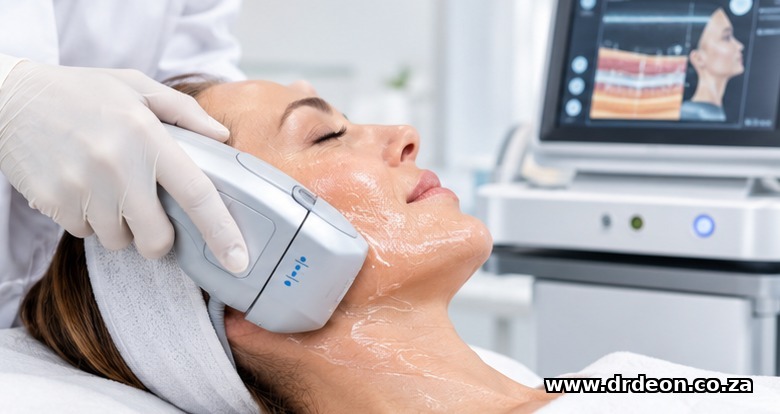
At the deepest setting, around 4.5 mm, the energy reaches the SMAS, the sheet of muscle and connective tissue that surgeons tighten during a facelift. The tissue at the focal point is briefly heated, which triggers a wound-heal response. Over the following weeks and months the body lays down new collagen and elastin in the treated layer.
WebMD’s patient-information page describes Ultherapy as a non-surgical ultrasound treatment cleared for lifting and tightening the skin on the brow, under the chin, and on the neck. The treatment does not target melanin, so it is considered appropriate for a range of skin types, and most patients return to normal activity the same day.
What Ulthera is designed to address
Ulthera is designed for mild to moderate skin laxity, not for significant laxity or excess skin. The treatment is typically best suited to people whose skin is mildly to moderately loose, particularly along the brow, the lower face and jawline, the area under the chin, and the upper neck. If there is a need for dramatic lifting or skin removal, surgery is usually the more appropriate option.
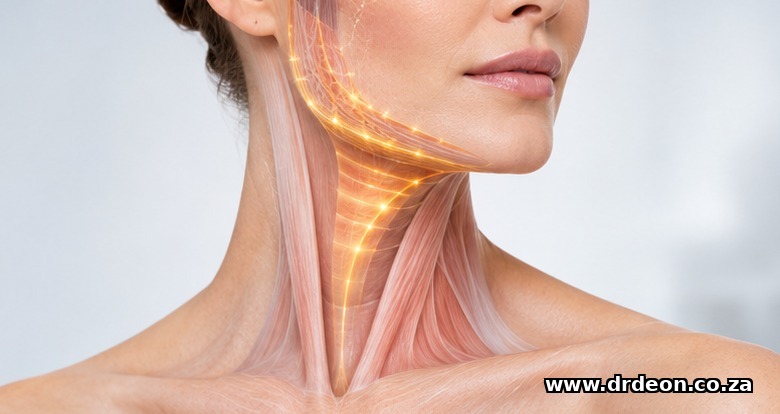
The result Ulthera is built to produce is a gradual firming and a modest lift, not an immediate structural change. The visible improvement builds over two to three months as new collagen matures, and it continues to develop for up to about six months. The change is subtle compared with a surgical facelift, which physically repositions the SMAS and removes excess skin.
What happens on the treatment day
A Ulthera treatment begins with a consultation to confirm candidacy and map the areas to be treated. On the day of the procedure, the skin is cleansed and the practitioner uses a surgical skin marker to map and number the treatment zones, which determines the depth and energy setting used in each area.

Ultrasound gel is applied and the handpiece is glided across the skin while the practitioner watches the tissue layers on the device screen. Each pulse delivers a brief pulse of focused ultrasound at the planned depth. A treatment typically lasts 30 to 90 minutes depending on the area or areas being treated. Most patients describe a warm, tingling, or prickling sensation as the energy is delivered, and practitioners can adjust settings or use pain relief if the discomfort becomes more than mild.
No anaesthetic is required and there are no incisions. At DW Skin & Body, the consultation, the treatment, and the follow-up are all with Dr Deon Weyers personally, with no handoff to junior associates.
Recovery and timing of results
There is little to no downtime after Ulthera. Most people return to normal activity the same day. The visible result does not arrive on the day, which is the single most common source of disappointment with the treatment, and it is worth understanding the timeline before booking.
| Stage | What is happening | What to expect |
|---|---|---|
| Day of treatment | Energy delivered, thermal points placed. | Mild redness, swelling, or tenderness in treated areas. Normal activities can usually resume the same day. |
| First 1 to 2 weeks | Initial wound-heal response begins. | Swelling and any tenderness settle. Most people look and feel back to normal within a few days. |
| Weeks 4 to 12 | New collagen production ramps up. | Gradual firming becomes visible to the patient and to others. This is the window when most people start to notice a change. |
| Months 3 to 6 | Neocollagenesis continues and the result matures. | The full effect of a single treatment becomes apparent. Further improvement after month 6 is unusual. |
| Beyond 6 months | Natural collagen turnover continues. | Results last on the order of a year or more for many patients, depending on age, skin quality, sun exposure, and lifestyle. A maintenance session is sometimes discussed at consultation. |
Icing the treated area is generally recommended for the first 24 hours, and vigorous exercise is usually avoided for a few days. Sun protection is sensible regardless of treatment, as it is for any skin-lifting or rejuvenation procedure.
Risks and side effects
Ulthera has a recognised safety profile, but it is not risk-free. The most common side effects are mild and short-lived, and the less common ones are the reason the treatment belongs in a regulated medical setting rather than a non-clinical spa.
- Redness and flushing in the treated area, usually settling within a few hours.
- Mild swelling or bruising, particularly around the jawline and under the chin, settling within days.
- Tenderness or tingling to the touch for a few days to a few weeks after treatment.
- Small areas of temporary numbness, which usually resolve as the tissue settles.
- Less common: small burns, blistering, or persistent nerve irritation when energy is delivered at the wrong depth or with the wrong settings.
- Rare: prolonged nerve symptoms or visible contour irregularities, both of which warrant an early review.
The risk profile is one of the reasons a practitioner experienced with the device matters. Real-time ultrasound imaging lets the clinician see the tissue layers before each pulse, which is precisely what reduces the chance of placing energy at the wrong depth. Any redness, swelling, or discomfort that does not settle within the expected window should be reported back to the treating practice.
Who is a good candidate
Ulthera tends to suit people in their thirties and older with mild to moderate skin laxity, particularly along the jawline, under the chin, and across the brow, whose skin is still capable of mounting a meaningful collagen response. It also suits people who want a treatment with little to no downtime and who have realistic expectations about the magnitude of the change.
It tends to be a poor fit where there is significant skin excess, marked jowling, or advanced laxity of the neck. In those situations, a surgical facelift, a deep plane facelift, or a different combination of treatments is usually more appropriate. Candidacy also depends on medical history, current skin condition, and prior treatments, which is why this is decided at an in-person consultation rather than from a web page.
As part of the broader non-surgical treatments offered at this practice, Ulthera sits alongside chemical peels, neurotoxin injections, volumising fillers, and skin treatments such as Sculptra. The choice between them depends on what is being addressed, and they are often combined rather than treated as either-or.
Common mistakes to avoid when researching Ulthera
The single most common mistake is to read the before-and-after galleries on the manufacturer’s site and assume that result is the average. Manufacturer galleries are curated. The realistic range of Ulthera outcomes is more modest than those galleries suggest, and depends heavily on starting skin quality.
- Expecting surgical-grade lift from a non-surgical device. Ulthera tightens and firms. It does not remove skin, reposition the SMAS, or redrape the face. A surgical facelift is a different intervention for a different degree of laxity.
- Judging the result at two weeks. Visible change usually begins around weeks four to twelve and continues to build for up to six months. Treating the procedure as a failure at week three is the most common source of unnecessary disappointment.
- Choosing on price alone. The cost drivers are the device used, the mapping, the number of lines delivered, and the experience of the practitioner. A very low quote often means fewer lines, less mapping, or an older device.
- Booking without an in-person candidacy assessment. A web page cannot tell whether the laxity is mild, moderate, or advanced. The same device in two different patients produces very different outcomes.
- Assuming Ulthera replaces skincare. Sunscreen, retinoids, and pigment management do the work that protects the result. Ulthera does not substitute for a basic skin-health routine.
- Booking through a non-medical provider. In South Africa, energy-based devices of this class belong in a regulated medical setting. The risk categories above are the reason.
How Ulthera compares to a surgical facelift
The American Society of Plastic Surgeons describes a facelift, technically a rhytidectomy, as a restorative procedure that addresses sagging facial skin, deepening fold lines between the nose and mouth, jowls, and loose neck skin, by physically lifting and re-draping the tissue. A facelift is performed in theatre, takes several hours, and involves a recovery measured in weeks rather than days.
| Factor | Ulthera | Surgical facelift |
|---|---|---|
| How it works | Micro-focused ultrasound through intact skin, heating tissue at depth. | Incisions around the hairline and ears, physical repositioning of skin and SMAS. |
| Anaesthetic | None usually required. | General anaesthetic. |
| Treatment time | 30 to 90 minutes per session. | Several hours in theatre. |
| Setting | In-rooms procedure. | Hospital theatre. |
| Downtime | None to minimal, same-day return to most activities. | Weeks, with staged return to social activity. |
| Magnitude of lift | Modest, builds over three to six months. | Significant, immediate. |
| Best suited to | Mild to moderate laxity, earlier signs of ageing. | Moderate to advanced laxity, structural descent. |
| Reversibility | Wears off as collagen turnover continues. | Permanent structural change. |
Ulthera is non-invasive, requires no anaesthetic, takes under an hour and a half, and has effectively no downtime, but it cannot match the magnitude or the longevity of a surgical result in patients with more than mild laxity. The two are not interchangeable. They sit at different points on a spectrum, and the right choice depends on what is actually being addressed. Some patients start with Ulthera and proceed to a surgical option later; others do the reverse.
What to ask at your consultation
A useful consultation gives a clear answer to three questions: whether Ulthera is appropriate for the laxity in question, what the realistic magnitude of change is for that specific case, and what the alternatives are if it is not. It is reasonable to ask how many Ulthera treatments the practitioner has performed, what depth settings are being planned, and how the result will be photographed and reviewed at follow-up. Dr Deon Weyers is a board-certified plastic and reconstructive surgeon, registered with the Health Professions Council of South Africa and a member of APRASSA.
Frequently Asked Questions
Is Ulthera the same as a facelift?
No. Ulthera is a non-invasive ultrasound treatment that stimulates new collagen for gradual firming and a modest lift, while a facelift is a surgical operation that physically repositions the SMAS and removes excess skin. Ulthera cannot match the magnitude or longevity of a surgical facelift for patients with more than mild laxity.
How long does a Ulthera treatment take?
A single Ulthera session typically lasts between 30 and 90 minutes, depending on the size of the area being treated. A full face and neck treatment sits at the longer end of that range.
When will I see the results of Ulthera?
Most patients begin to see gradual firming between weeks four and twelve. The visible change continues to build for up to about six months as new collagen matures. Ulthera does not produce a same-day result, which is the most common source of disappointment with the treatment.
How long do Ulthera results last?
Results from a single Ulthera treatment typically last on the order of a year or more, depending on age, skin quality, sun exposure, and lifestyle. A maintenance session is sometimes discussed at a follow-up consultation.
Is Ulthera painful?
Most patients describe Ulthera as warm, tingling, or mildly prickling rather than painful. Practitioner settings can be adjusted, and topical or oral pain relief is available if the sensation is more than mild. Tenderness or tingling in the treated area for a few days after the session is normal.
What are the main risks of Ulthera?
The most common side effects are short-lived redness, swelling, bruising, tenderness, and small areas of temporary numbness. Less common risks include burns, blistering, persistent nerve irritation, and rare contour irregularities, which is why the treatment belongs in a regulated medical setting.
Who is not a good candidate for Ulthera?
Ulthera is a poor fit for patients with significant skin excess, marked jowling, or advanced neck laxity, where a surgical facelift is usually more appropriate. Candidacy also depends on medical history and current skin condition, which is why this is assessed at an in-person consultation.
Does medical aid cover Ulthera in South Africa?
Ulthera is a cosmetic, non-surgical treatment and is not typically covered by medical aid. Coverage questions should be raised with your medical scheme directly, because schemes vary and indications differ.
Book a consultation. Candidacy for Ulthera is assessed in person at DW Skin & Body. To arrange a consultation with Dr Deon Weyers, call 011 875 1694 or request a consultation online. The practice is based at Suite B22, Life Fourways Hospital, Fourways, Johannesburg, and sees patients from across South Africa. Dr Weyers is a board-certified plastic and reconstructive surgeon, registered with the Health Professions Council of South Africa and a member of APRASSA. The practice is rated 4.9 stars on Google.
Medical disclaimer. This article is general information about Ulthera (the Ultherapy treatment) and is not medical advice for any individual. Outcomes, recovery and candidacy vary between patients and can only be assessed in person. Ulthera is a registered medical device; readers considering the treatment should consult an HPCSA-registered practitioner about their own circumstances, and should confirm the registration and indication status of the device with the South African Health Products Regulatory Authority (SAHPRA) where relevant. Coverage questions should be raised with your medical scheme.
